Showing posts with label diversity of learner. Show all posts

Thursday, 7 September 2017

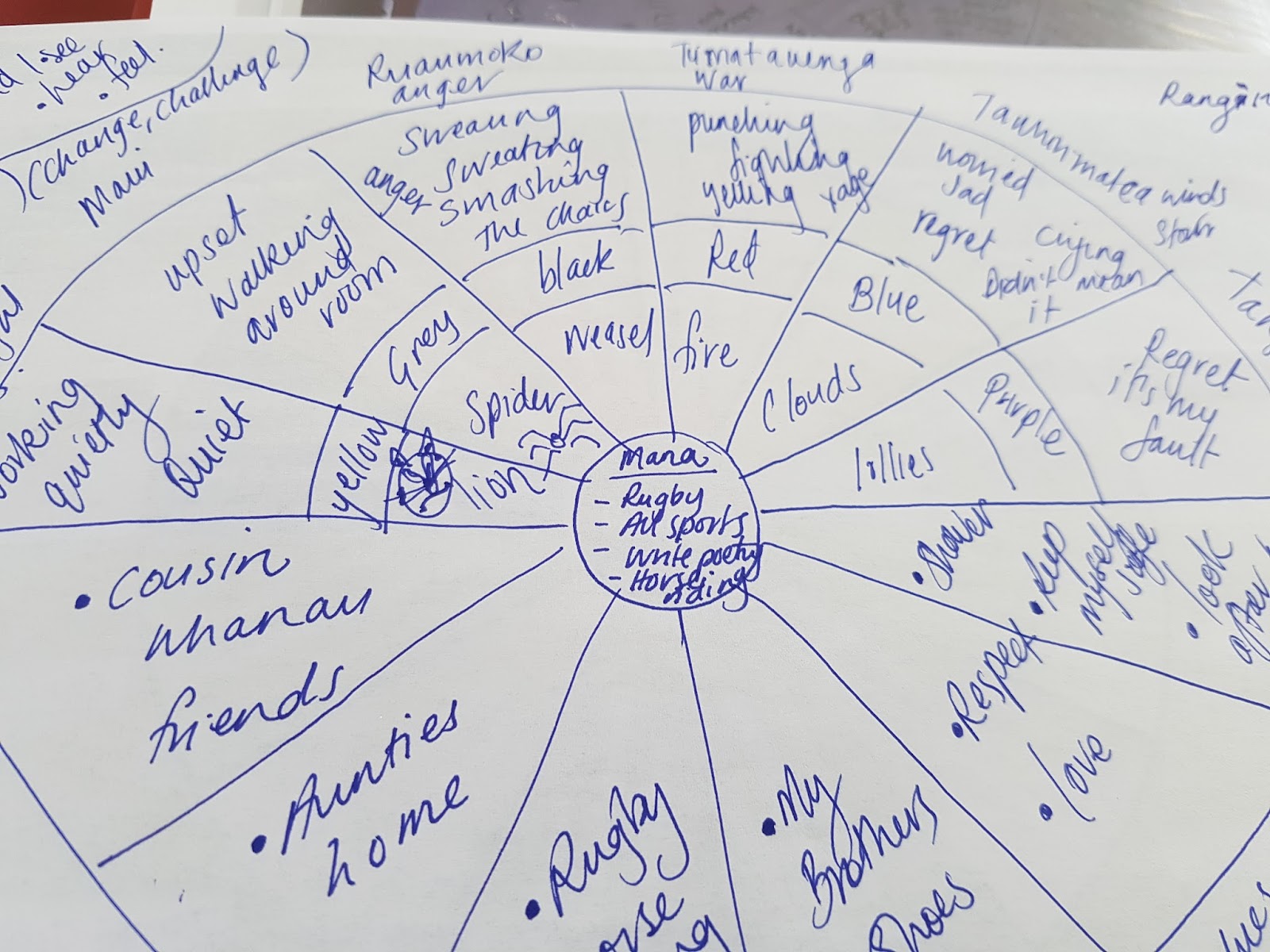
Mana Enhancement

Mana Enhancement

A culturally centered Model of your own creation                               

Te Ara Whakamana- The enhancement model uses  narratives ,colour  and metaphor to explore the uniqueness of the individual and their world

The Maori creation story
Papatunuku ( earth mother)   Ranginui ( Sky father)  created the Atua ( gods )

A NZ Model if you want to adapt it you can

MANA 20170906_103750.jpg
Ma - White/purity         pure about ourselves
Ana -care tinana
Seed /can be tainted if you need mana to be the best you can be
Identity
Whakapapa
It is the feeling of the person/anything is possible Wairua
Pride, power,respect

At the centre is the uniqueness of the individual and their Mana

Its about Mana

Mana Atua- Sprirtual
Mana tangata-skills and talents,thoughts and deeds
Mana Tane
Mana wahine
Mana Tamariki/Mokopuna
Mana whenua- our relationship with the land
Tangata Whenua-indigeneity

Not here to replace. This will enhance your practice

3 other tenets

Whakamana Mana enhancement            Strengths based          Ako -Co Construction

Ako teacher being the learner the learner being the teacher

Model will grow    both grow
Looking for strengths of charecter and culture

School wide/whanau

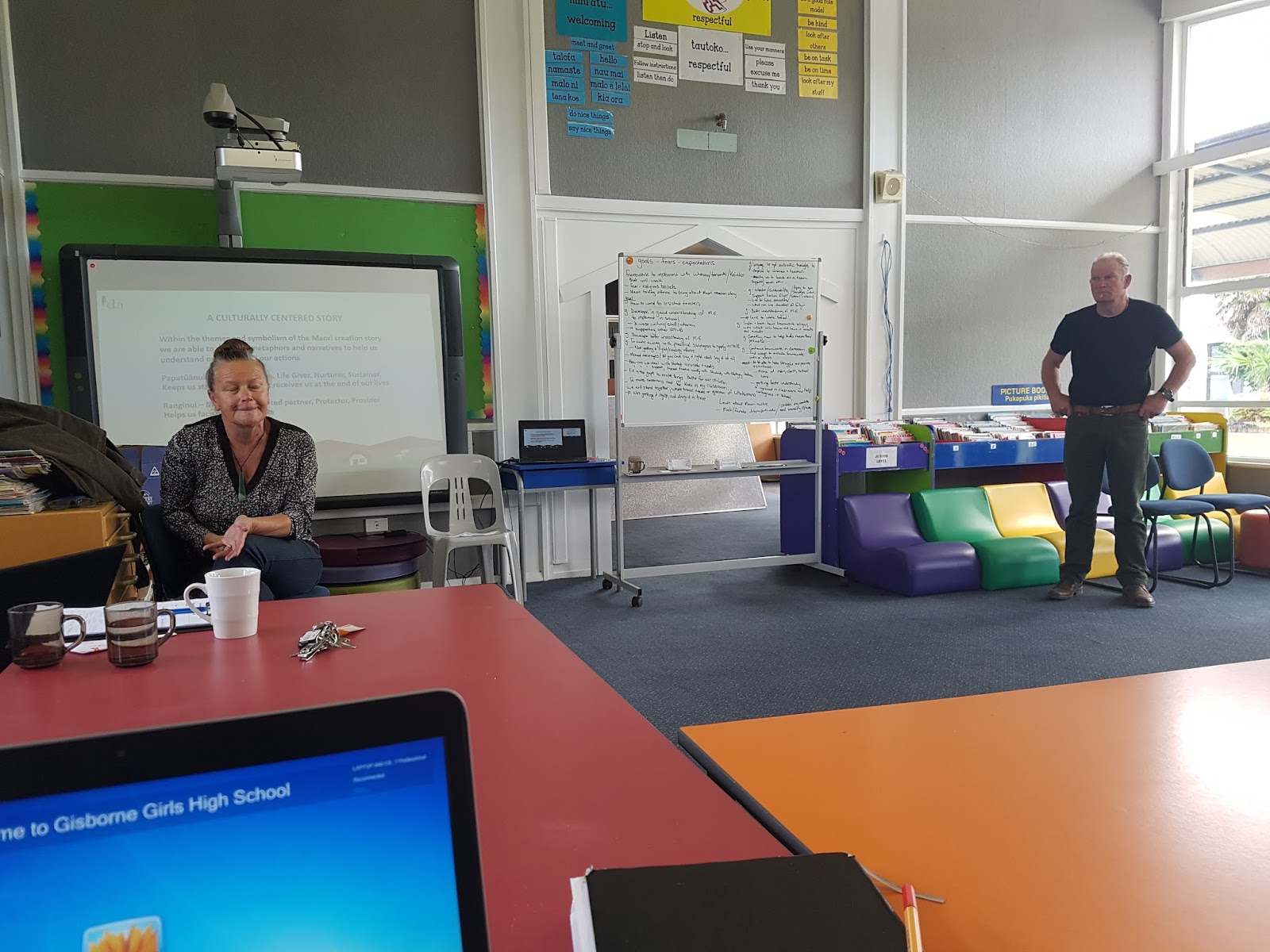
A culturally centred story
20170906_122252.jpg

What fits the person is important

Using an indigenous framework for a narrative enquiry

About what  nurtures, calms, sustains and strengthens

Mana is enhanced
Brilliant actions and exceptional talent will be noticed and enhance ones Mana

Actions that cause harm, will also be noticed and will have a negative effect on Mana- It will diminish

Setting the environment with a karakia
In their voice how they said it student voice we don’t challenge we except in this moment
Model of inquiry

As a class what does Mana mean to us as a class

What is hidden visible

Stories
Korero around Mataora
Niwareka

Maui

Maui the adventurer- He wanted to see how far he could go and what he could achieve
Maui the trickster- He could be a bit naughty and hoha
Maui who had a bad start- He was left for dead as a baby
Maui the shape shifter- Sometimes he had to get himself out of trouble

Maui who created positive change for everyone

Wednesday, 6 September 2017

The Brain Revisited

THE BRAIN REVISITED
Presenter - Nathan Mikaere-Wallis
Date: 31 July 2017..10am-4pm : General focus and a focus on the Teenage Brain
(most applicable for intermediate and high school teachers and SENCO)


(most applicable for primary teachers and SENCO)C:\Users\Educator\Pictures\Neuroscience Pictures\royalty-free-brain-mascot-clipart-illustration-210992tn.jpg


Venue: Te Aka Ora, 9 Temple Street
(please park on the street)


Potential Topics Covered:

Understanding the Brain
  • Nathan will explain what the very latest scientific research and human studies tell us, about how the brain grows and develops, and how this impacts on children’s behaviour, learning, and their social and emotional development.C:\Users\Educator\Pictures\Neuroscience Pictures\royalty-free-brain-mascot-clipart-illustration-210996tn.jpg
The Learning Brain
  • The development of specific areas needed for learning are covered in a little more depth.
  • The impacts of stress hormones on brain functioning and long term affect on brain development are described and the subsequent impact on learning and behaviour. We will learn about the importance of creating positive, safe environments and how best to achieve it.
The Adolescent Brain & “The Terrible Twos”
  • The brain goes through several ‘pruning’ phases which Nathan describes as ‘closed for renovations’. He will explain why brain pruning is an essential part of child development and offer some advice on how best to negotiate those sometimes challenging periods.
Special Brains
  • Finally we will consider the latest brain research perspectives on common clinical presentations such as ADD/ADHD, Autism & Dyslexia and how to best support these special brainsC:\Users\Educator\Pictures\Neuroscience Pictures\royalty-free-brain-mascot-clipart-illustration-211000tn.jpg


A Bit About The Speaker
Nathan Wallis is a father of three and foster parent with a professional background in child counselling, teaching and social service management. Until recently he lectured in Human Development at the University of Canterbury and was also a board member and Senior Trainer with the highly respected Brainwave Trust. In 2010 he founded a private training consultancy,
Nathan Wallis Ltd, with the goal of facilitating easy to understand
professional development training reflecting the latest neuroscience
discoveries and their practical implications for everyday practice.
Since then he has been in hot demand, delivering in excess of 150
presentations every year throughout New Zealand and Australia. He
has developed a reputation as a lively and engaging speaker who uses
humour and plain language to make this complex topic come to life.

Link to notes from the workshop


Thursday, 29 June 2017

Multi Lit Programme

Great to have the opportunity to Go to the Multi Lit training at Gis Int. Going through the programme made me aware of the benefits of the programme how to teach the programme and how to get the resources


MultiLit Intervention:


This is a non-categorical approach while being an integrated model of effective literacy instruction.


Research conducted by both the American National Reading Panel and later the Australian National Inquiry into the teaching of literacy found that all children learn to read most effectively through explicit instruction in:
  • Phonemic awareness
  • Phonics
  • Fluency
  • Vocabulary knowledge
  • Comprehension


Those students with memory deficits  do make progress, but at a different rate.


Word Attack Skills:
Level 1: single sounds and vc and cvc words.
Level 2: double consonant sounds – vcc and cvcc words
Level 3: consonant digraphs – cvcc, ccvc, ccvcc words
Level 4: final cc words
Level 5: Initial cc blends
Level 6: initial ccc blends
Level 7: cvc, cvc+e words
Level 8: letter combinations e.g. ee ea
Level 9: letter combinations e.g. oo ew
Level 10: r controlled letter combinations
Level 11: letter combinations/end letter sound
Level 12: r controlled letter combinations
Level 13: Cumulative review


Sight Words:
These are 20 lists of the 200 most common words in reading, minus any words that are phonemically regular. These are to be committed to long term memory for automatic (within 2 seconds) retrieval.


Reading:
This is based on the pause prompt praise method developed by Ted Glynn at Auckland University in the late 1970s with colleagues Stuart McNaughton and Vivianne Robinson.  It is for use with low progress readers, not non readers. Choosing the ‘best fit’ books is a key element in the success of ‘reinforced reading’.


The PPP Tutoring Strategy of MultiLit Reinforced Reading


When a student makes an error or hesitates…
PAUSE:
For five seconds or until the end of the sentence before intervening.

If the student does not then self-correct the error or attempt the word…
PROMPT:
  1. To correct an error, offer a general phonic prompt initially (if the error does not make sense, point this out also.
  2. To encourage a student to attempt an unread word, offer a re-read prompt initially.
  3. If the initial prompt is unsuccessful, offer the second, specific prompt.
  4. If the student is still unsuccessful after two prompts, provide the word and move on.
(Remember to pause after each prompt.)


When the student reads successfully…
PRAISE:

  1. Praise when the student self-corrects an error or reads the word correctly after a pause.
  2. Praise when the student corrects an error or reads the word correctly after a prompt.
  3. Praise when the student reads a sentence, paragraph or page correctly.

Dyslexia

Great to be able to be supported by firstly my Triad who gave up their time to teach me how to use the Pearson Dyslexia Junior test and Input in.

Firstly I observed Don Administer the test at Riverdale. We inputted the results together

Secondly Vix supported me at Wainui Administer the test. It was great to have someone with me and observe how both build relationships with students.

I then observed Karryn administer the Dyslexia screening on the I pad at Kaiti.

I would use the I pad screening as a starter but not on children under 8. They are too young. The Pearson test would be my next step. I administered the I pad screening on both my own kids to practice

Saturday, 24 October 2015

Bobbie Maths


I have been trialling bobbie maths for 1 term.  working with half the class 1 day then the other half the next day. Session 3 has been my focus group. Session 4 extension. My concen is now th kids in the middle slipping through the gaps.

 Term 3 Attended a problem solving writing meeting with Alicia, Carrie, Hermie. Everyone is taking a different approach. Difference in our problems

I have also add a professional discussion with Bruce re what he is doing. Would be great to visit his room and see his take on Bobbie maths


Examples of the questions I have written
Problem solving questions