Wednesday, 6 September 2017

One day Conference-July Holidays

LEARNING FOR ALL ACROSS THE SECTOR
One-Day Conference
Monday 17th July 2017


Nāku te rourou nāu te rourou ka ora ai te iwi
With your basket and my basket the people will live


Dr Ann Milne
Dr Ann Milne is the former principal of Kia Aroha College, a designated-character secondary school in Otara, Auckland. 
Ann is a strong critic of pervasive, deficit-driven explanations of “achievement gaps” and Māori and Pasifika “under-achievement”.
Ann is the author of Coloring in the White Spaces: Reclaiming Cultural Identity in Whitestream Schools
Keynote — Coloring in the White Spaces: Reclaiming Cultural Identity in Whitestream Schools

Workshop 2 — What is success? Different perspectives through the self-learning lens and the connected-learning lens.


Assoc Prof. Andrew Gibbons
Andrew is a teacher educator and Associate Professor at AUT’s School of Education. He has worked in journalism, in the social services in England and in early childhood education in Auckland.

Andrew has a keen interest in philosophy and politics, and these orient his research of education generally, to questioning beliefs and practices, and their impact on the experience of being human.

He has published widely on topics including the early childhood teaching profession, Aotearoa New Zealand early childhood education policy, approaches to early childhood curriculum, the educational implications of the work of Albert Camus, the philosophy of education, the role of technology in education, and the future of the university.

Editor in Chief – eLearning and Digital Media
Workshop 1 — What school leaders might consider in planning to engage with ILEs — new designs in learning environments, and shifting expectations of teaching in such spaces.


Thursday, 29 June 2017

Pepeha for ERO

I enjoyed the process of writing my Pepeha for ERO. Hariata and Karryn both gave me support as when I translated through translator it wasn't totally accurate


IMG_20170601_211856.JPG

Ko Heather Collier toku ingoa,
Ko Jason Collier toku hoa rangatira,
Tokorua aku tamariki,
Ko Zeke taku tama,
Ko Macy taku tamahine.

Ki te taha o toku hoa rangatira,
Ko Te Aitanga-a-Makaki te Iwi,IMG_20170602_134207.JPG
Ko Takipu te Marae,
Ko Waipaoa te Awa,
Ko Maungahaumi te Maunga.

Ko Dianne Barclay toku Mama,
Ko Richard Barclay toku Papa,
No Turanganui-a-Kiwa raua.

No reira, tena koutou, tena koutou, tena tatou katoa.

Multi Lit Programme

Great to have the opportunity to Go to the Multi Lit training at Gis Int. Going through the programme made me aware of the benefits of the programme how to teach the programme and how to get the resources


MultiLit Intervention:


This is a non-categorical approach while being an integrated model of effective literacy instruction.


Research conducted by both the American National Reading Panel and later the Australian National Inquiry into the teaching of literacy found that all children learn to read most effectively through explicit instruction in:
  • Phonemic awareness
  • Phonics
  • Fluency
  • Vocabulary knowledge
  • Comprehension


Those students with memory deficits  do make progress, but at a different rate.


Word Attack Skills:
Level 1: single sounds and vc and cvc words.
Level 2: double consonant sounds – vcc and cvcc words
Level 3: consonant digraphs – cvcc, ccvc, ccvcc words
Level 4: final cc words
Level 5: Initial cc blends
Level 6: initial ccc blends
Level 7: cvc, cvc+e words
Level 8: letter combinations e.g. ee ea
Level 9: letter combinations e.g. oo ew
Level 10: r controlled letter combinations
Level 11: letter combinations/end letter sound
Level 12: r controlled letter combinations
Level 13: Cumulative review


Sight Words:
These are 20 lists of the 200 most common words in reading, minus any words that are phonemically regular. These are to be committed to long term memory for automatic (within 2 seconds) retrieval.


Reading:
This is based on the pause prompt praise method developed by Ted Glynn at Auckland University in the late 1970s with colleagues Stuart McNaughton and Vivianne Robinson.  It is for use with low progress readers, not non readers. Choosing the ‘best fit’ books is a key element in the success of ‘reinforced reading’.


The PPP Tutoring Strategy of MultiLit Reinforced Reading


When a student makes an error or hesitates…
PAUSE:
For five seconds or until the end of the sentence before intervening.

If the student does not then self-correct the error or attempt the word…
PROMPT:
  1. To correct an error, offer a general phonic prompt initially (if the error does not make sense, point this out also.
  2. To encourage a student to attempt an unread word, offer a re-read prompt initially.
  3. If the initial prompt is unsuccessful, offer the second, specific prompt.
  4. If the student is still unsuccessful after two prompts, provide the word and move on.
(Remember to pause after each prompt.)


When the student reads successfully…
PRAISE:

  1. Praise when the student self-corrects an error or reads the word correctly after a pause.
  2. Praise when the student corrects an error or reads the word correctly after a prompt.
  3. Praise when the student reads a sentence, paragraph or page correctly.

Dyslexia

Great to be able to be supported by firstly my Triad who gave up their time to teach me how to use the Pearson Dyslexia Junior test and Input in.

Firstly I observed Don Administer the test at Riverdale. We inputted the results together

Secondly Vix supported me at Wainui Administer the test. It was great to have someone with me and observe how both build relationships with students.

I then observed Karryn administer the Dyslexia screening on the I pad at Kaiti.

I would use the I pad screening as a starter but not on children under 8. They are too young. The Pearson test would be my next step. I administered the I pad screening on both my own kids to practice

Friday, 19 May 2017

Building relationships with the students and Whanau of Patutahi school

It has been great to get to know the 19 students at Patutahi school as well as the Principal, some whanau and the teachers aids

Going on a trip with them to the museum was an awesome start. Also helping them with Gymnastics one lunchtime before I did an observation

Working Memory

Had a great conversation with Helena about working memory today


  •  Can effect 10 % of kids
  • Diet, sleep and modern technology mean that it is on the rise

Vists to Modern Learning Environment Kaiti School/PB4L

Great to Have the opportunity to visit 3 modern learning environments at Kaiti school, Gisborne Intermediate. Great to see how they are working and how RTLb can work in these rooms.
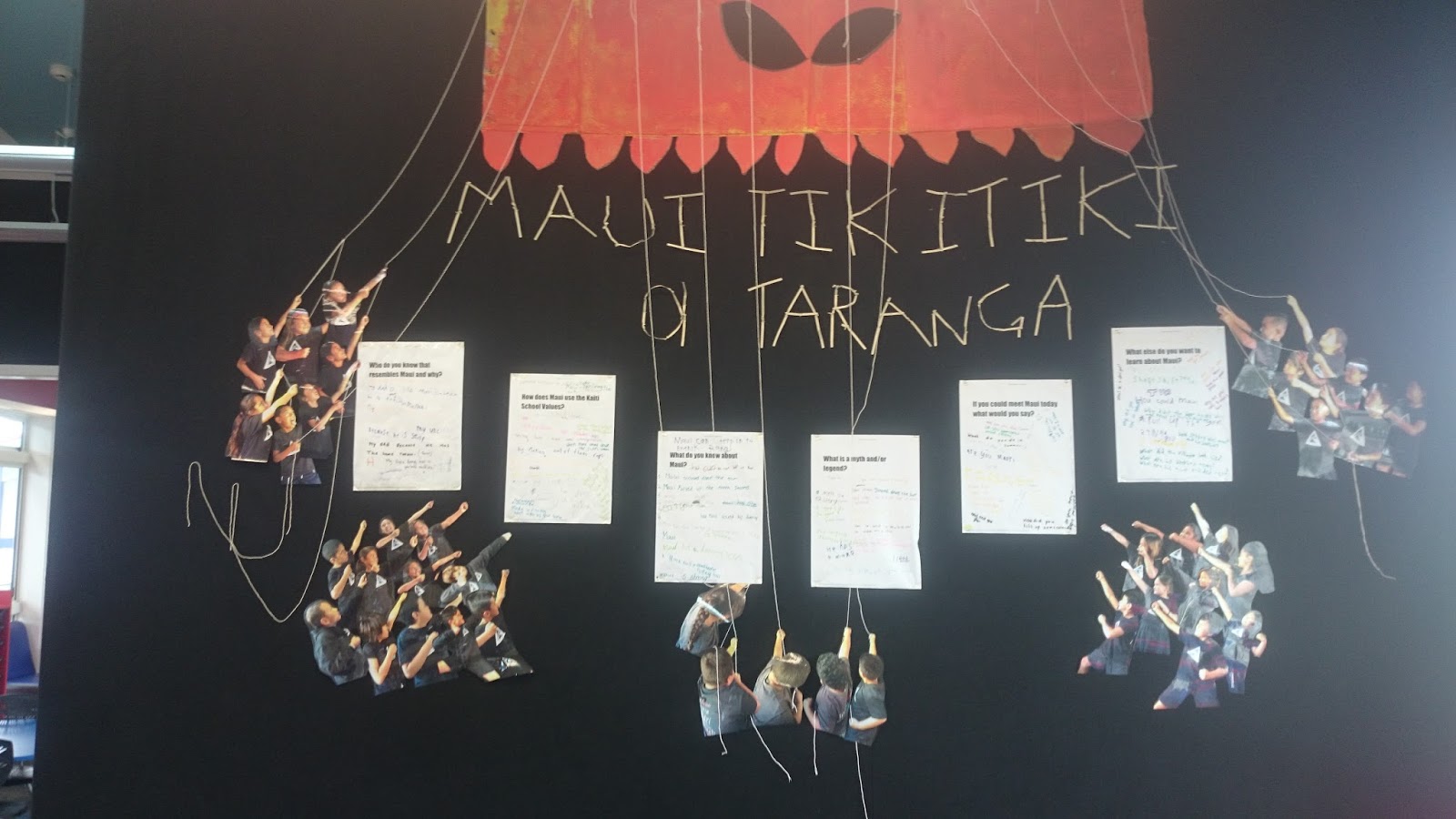
Loved the wall display at Kaiti school

How do Maui's values fit with the values at Kaiti school